Christchurch. Chorleywood
 A solid Victorian church on a main road and beside the village green. It is an imposing building designed by the redoubtable G.E Street and built in 1869-70. There is a excellent modern church centre adjoining. I was quite surprised to find it locked. Looking at the swish website (one of the best designed I have seen) at http://www.cccw.org.uk/ doesn’t enlighten me as to if the the church is ever open outside of service times. There certainly isn’t any indications at the church itself. I find this all very disappointing and rate it as very poor.
St. Andrew’s, Chorleywood
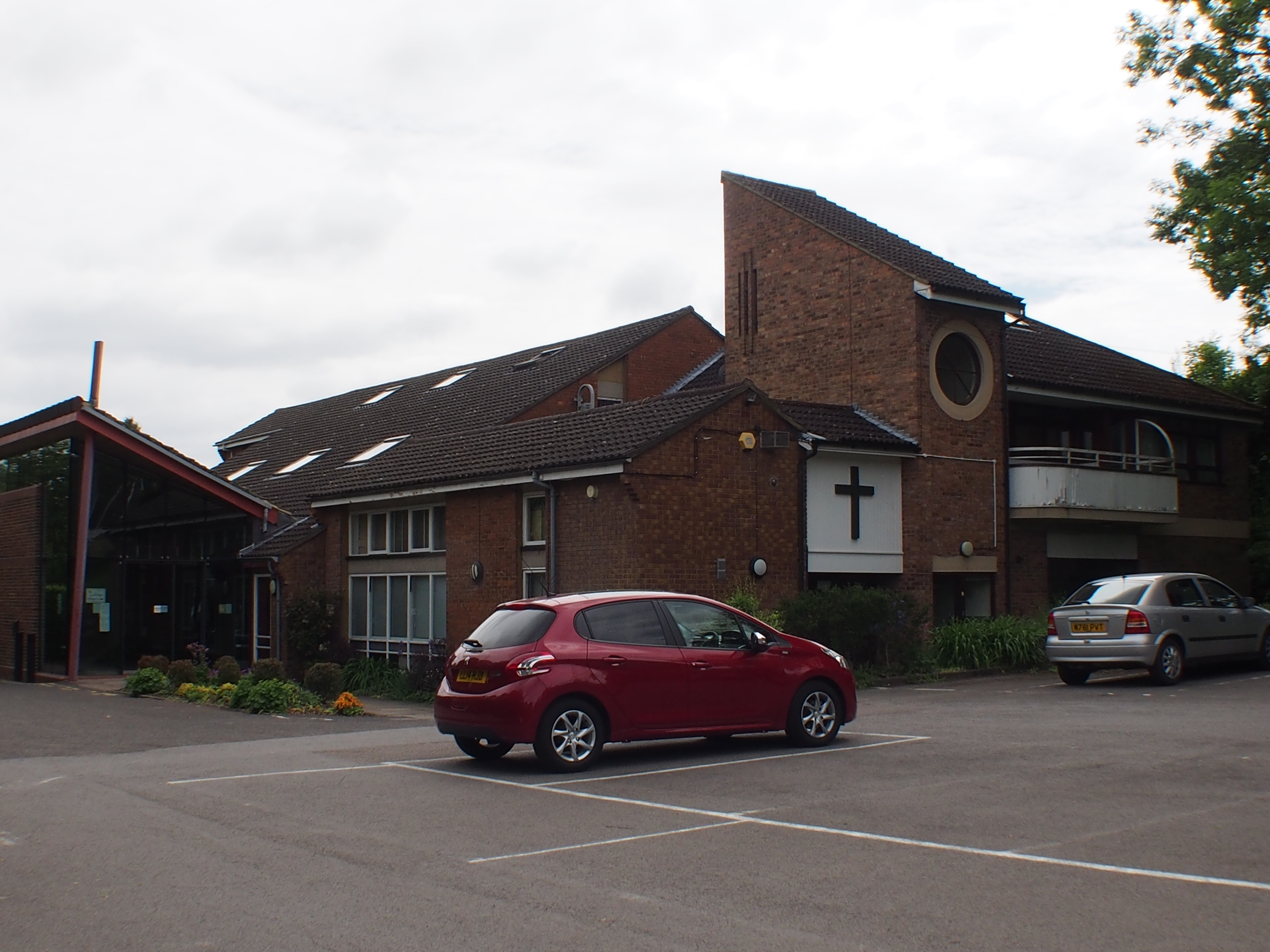 This well known church sits in the prosperous and lovely village of Chorleywood.
It is a modern building with a large car park, which reflects the fame of the church. I have been to conferences here a few years back when all sorts of strange things happened!
I didn’t really expect to find St. Andrew’s open and I wasn’t disappointed in that respect. The website, http://www.st-andrews.org.uk has a section entitled ‘Visitor Information’ but this is only concerned about the services on a Sunday. In the context of a church such as St. Andrew’s that is appropriate but I do wonder how much local impact a church such as this has? Does it matter? This does highlight some of the approaches that larger evangelical churches adopt and there is room for all sorts of styles on ministry in the modern church.
I have to rate St. Andrew’s as very poor for my purposes but I know that any visitor would be made welcome on a Sunday and enjoy lively worship, but this is not a place in which to seek God on a weekday.
Holy Cross Sarratt
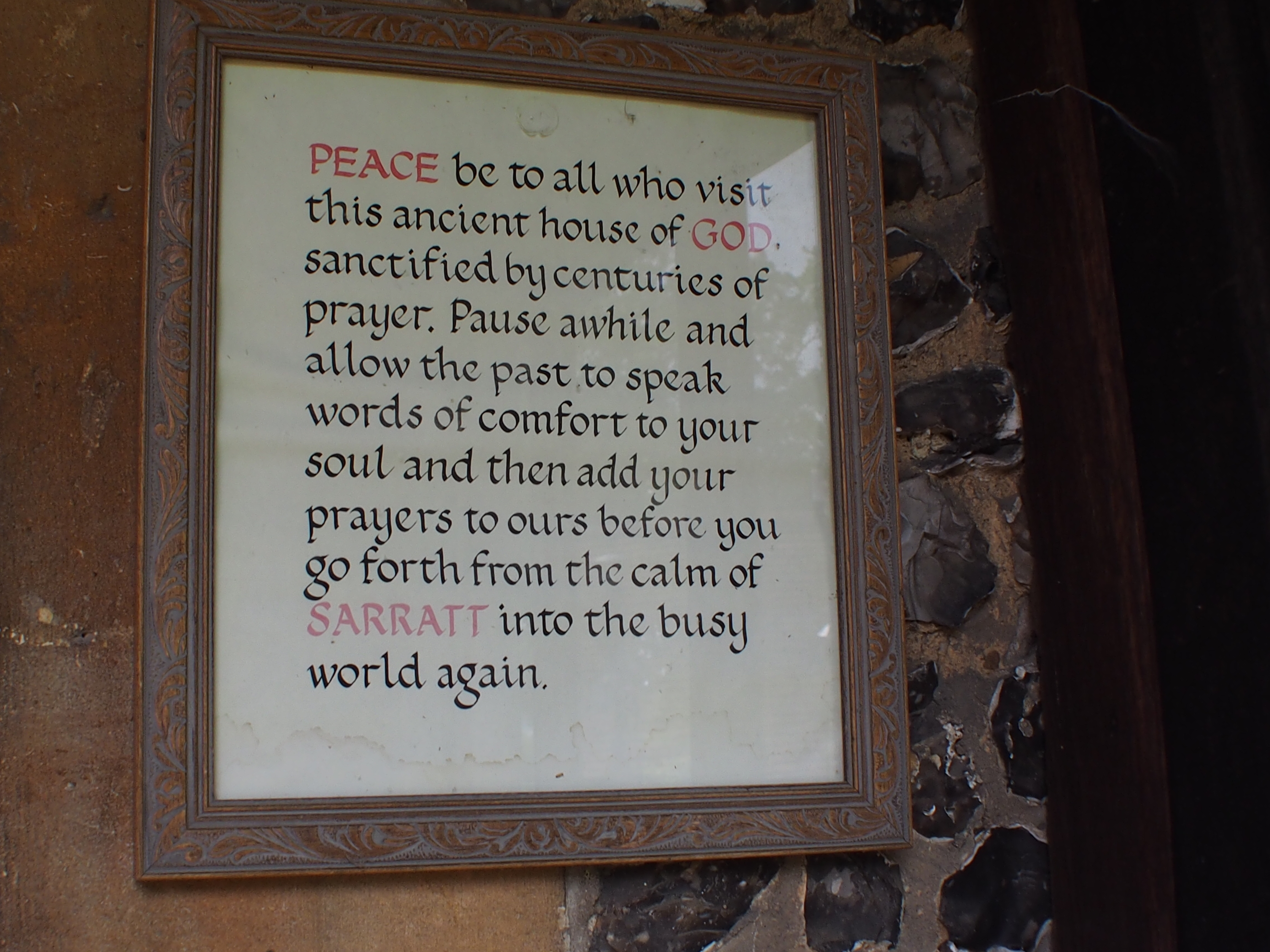
Welcome prayer on door
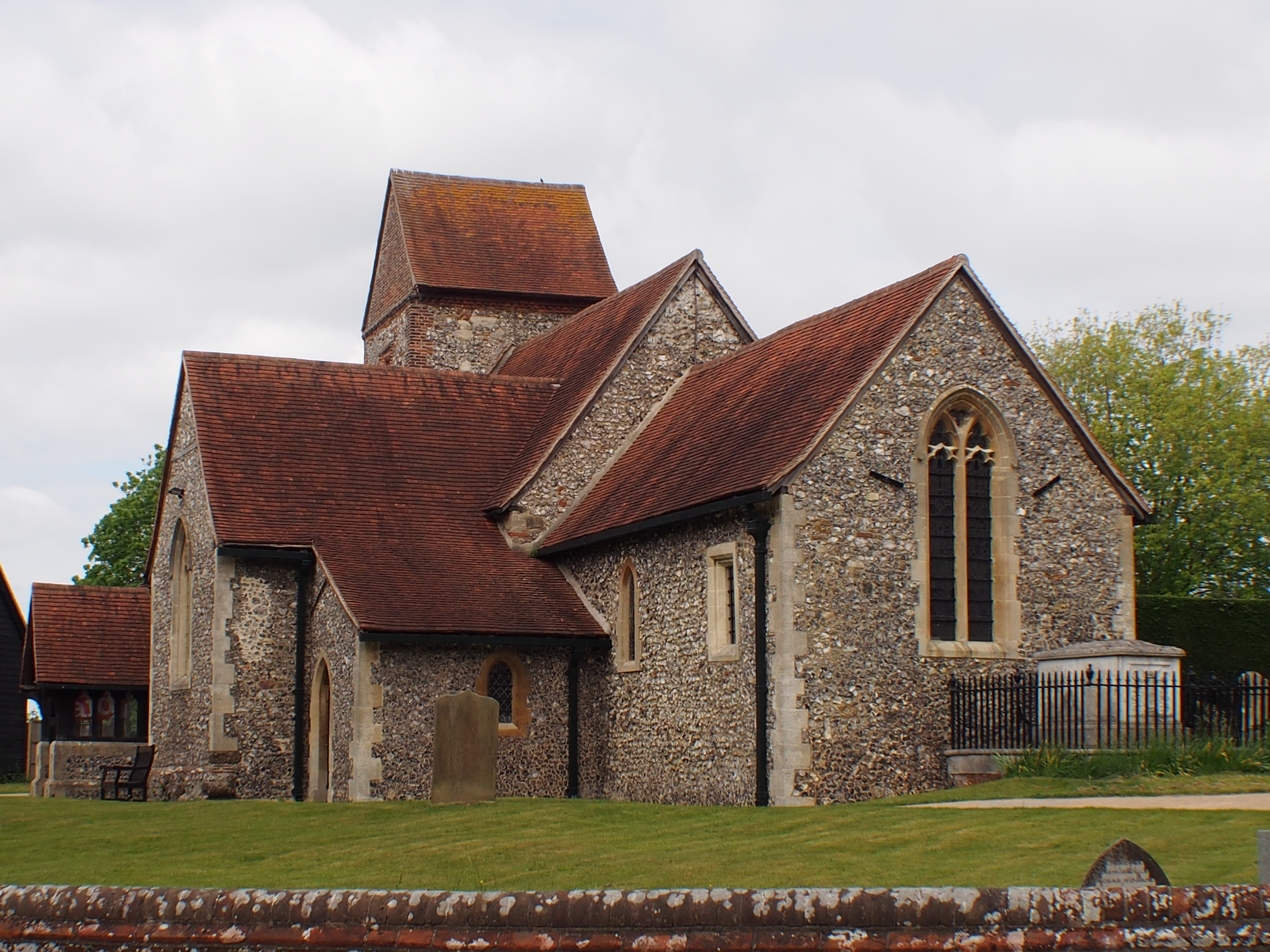
This Norman church has a cruciform plan – very appropriate considering it’s dedication
I found a lovely welcome prayer on the door. Incidentally, I have made it a practise to pray for all those connected with any church when I visit. This is whether it is open or not and I feel that this is an important part of this study, which is, after all, mainly concerned with how a church building can be used to communicate the faith we hold. Inside the church is very dark with a lot of dark woodwork. This gives it a good atmosphere although a light or two left on would be welcome (I understand that it is hoped to do this some time). Leaving the door open helps. To enter Holy Cross is to walk back in time and this is a church worth visiting. A well used footpath runs nearby – don’t just walk past, go in!
The visitors book, which is very prominent, showed 14 entries so far for May. There is a prayer board to leave requests on and a very good history display under the bell tower. There are some post cards for sale and a guide booklet at 1 pound only, and is a good example of a guide being on decent paper and printed in colour.
For the purposes of this study I rate Holy Cross as OK. There is a website at http://www.hcsp.net/ this gives clear directions as to how to find the church but no other visitor information.
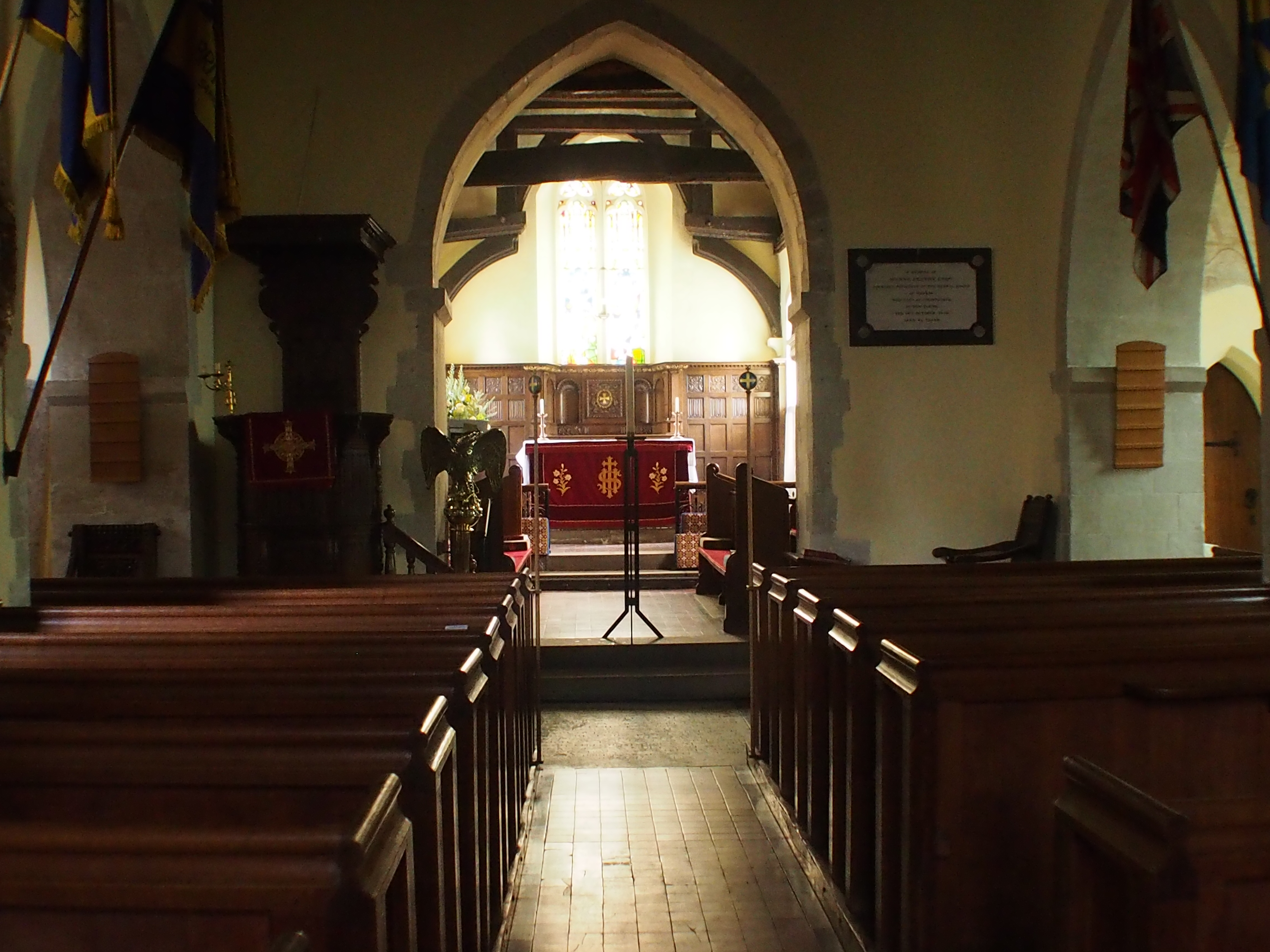
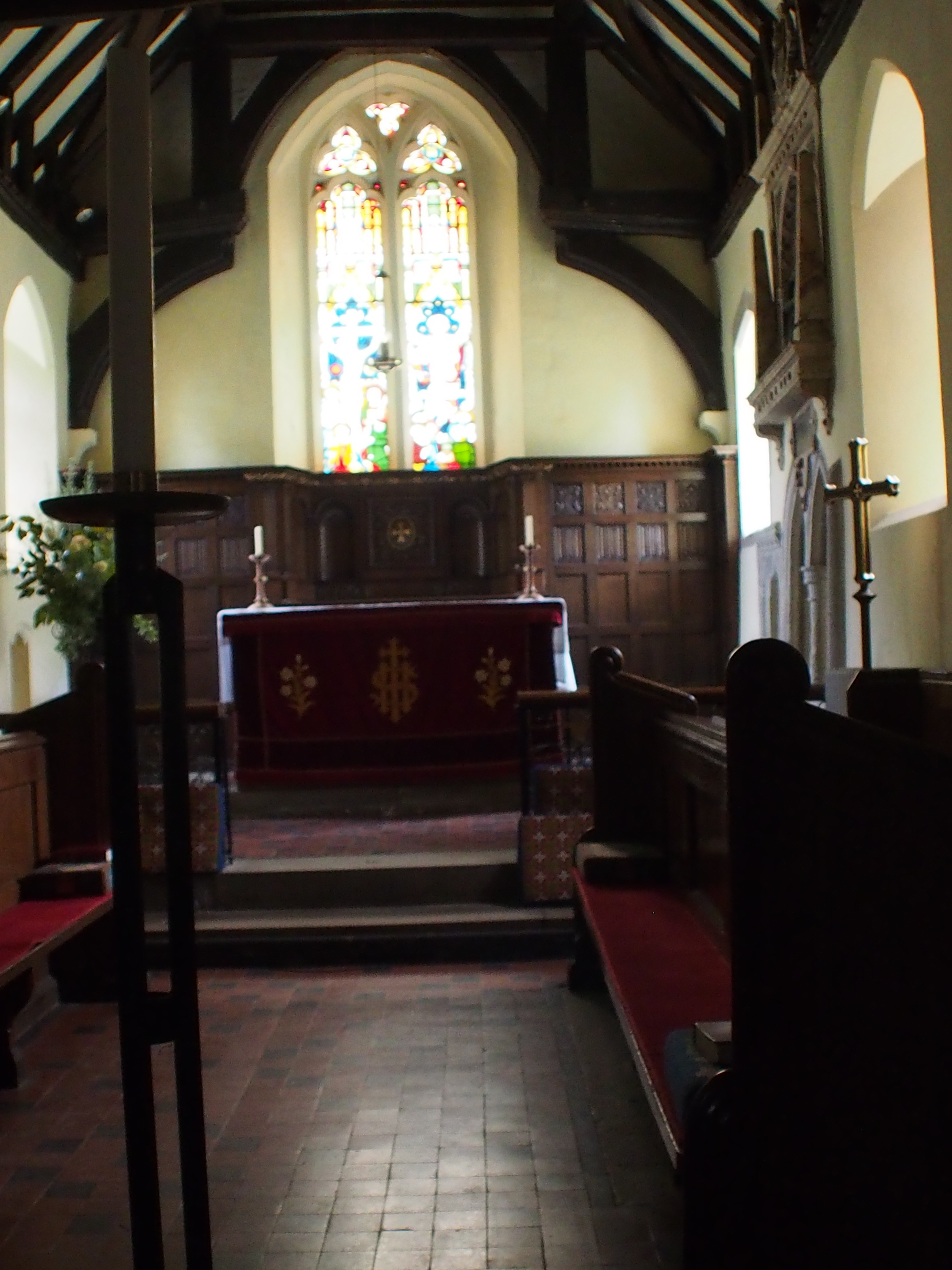
All Saints, Croxley Green
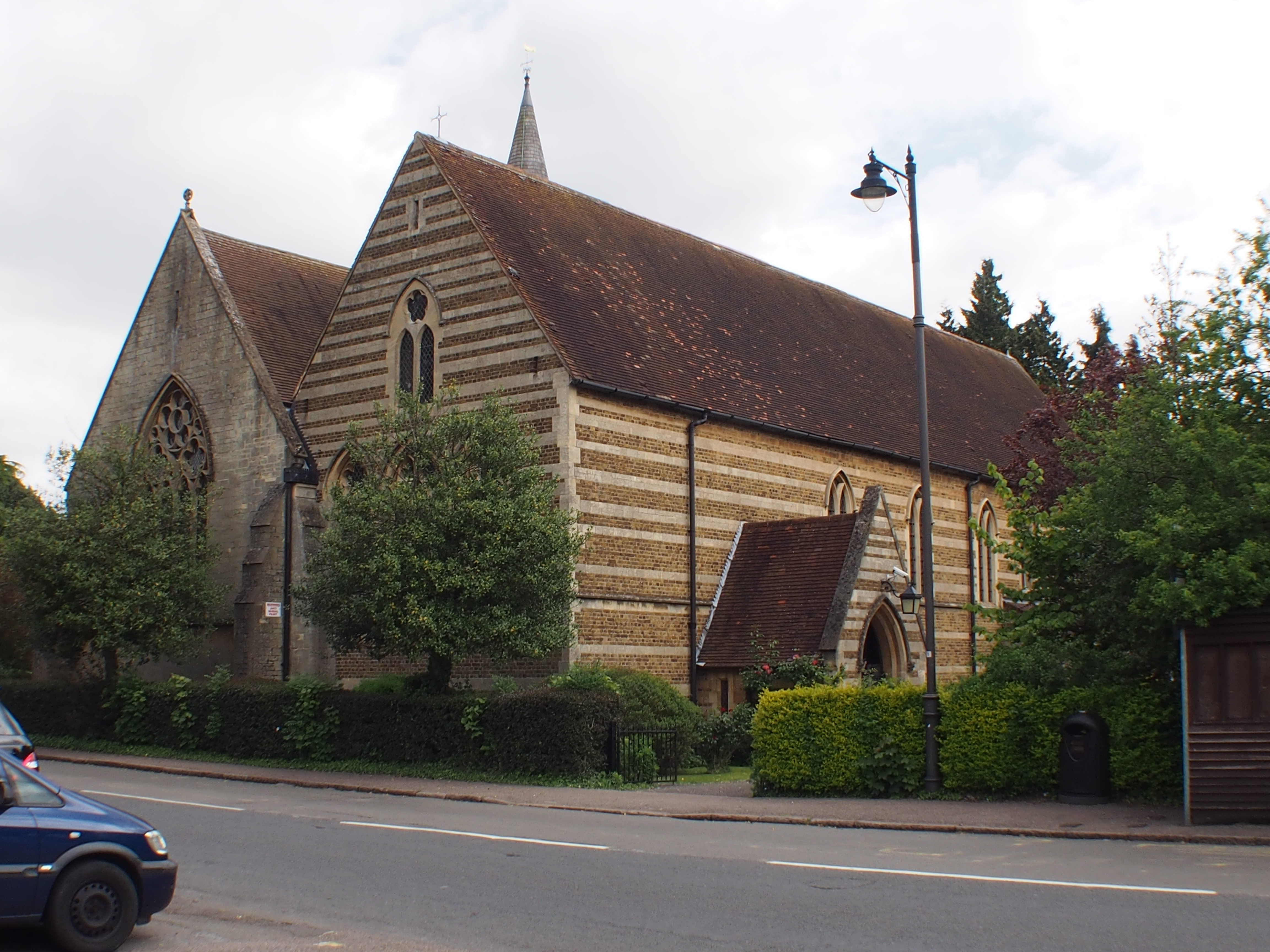
All Saints
This church sits on a busy road and is open each day.
There is a welcome notice on the board outside and on the gate leading into the porch. Inside, I found a good guide book at only 50p. There is a god area for children and the visitors book showed 4 entries so far for May.
There are details of the WW1 casualties who are named on the memorial at the back of the church also a church library and a display of the various people who hold offices in the church. These sorts of displays do remind visitors that here is not just an old building but a living church. ‘Saints and Pilgrims’ was open as well. There is a prayer board to use as well as a votive stand.
All Saints is another well kept church with a light interior and many signs that there is a lively church community who worship here. The website is at http://croxleygreenallsaints.org/index.htm this doesn’t give visitor information but does have a good church tour on it.
I rate All Saints as very good – call in if you are going past.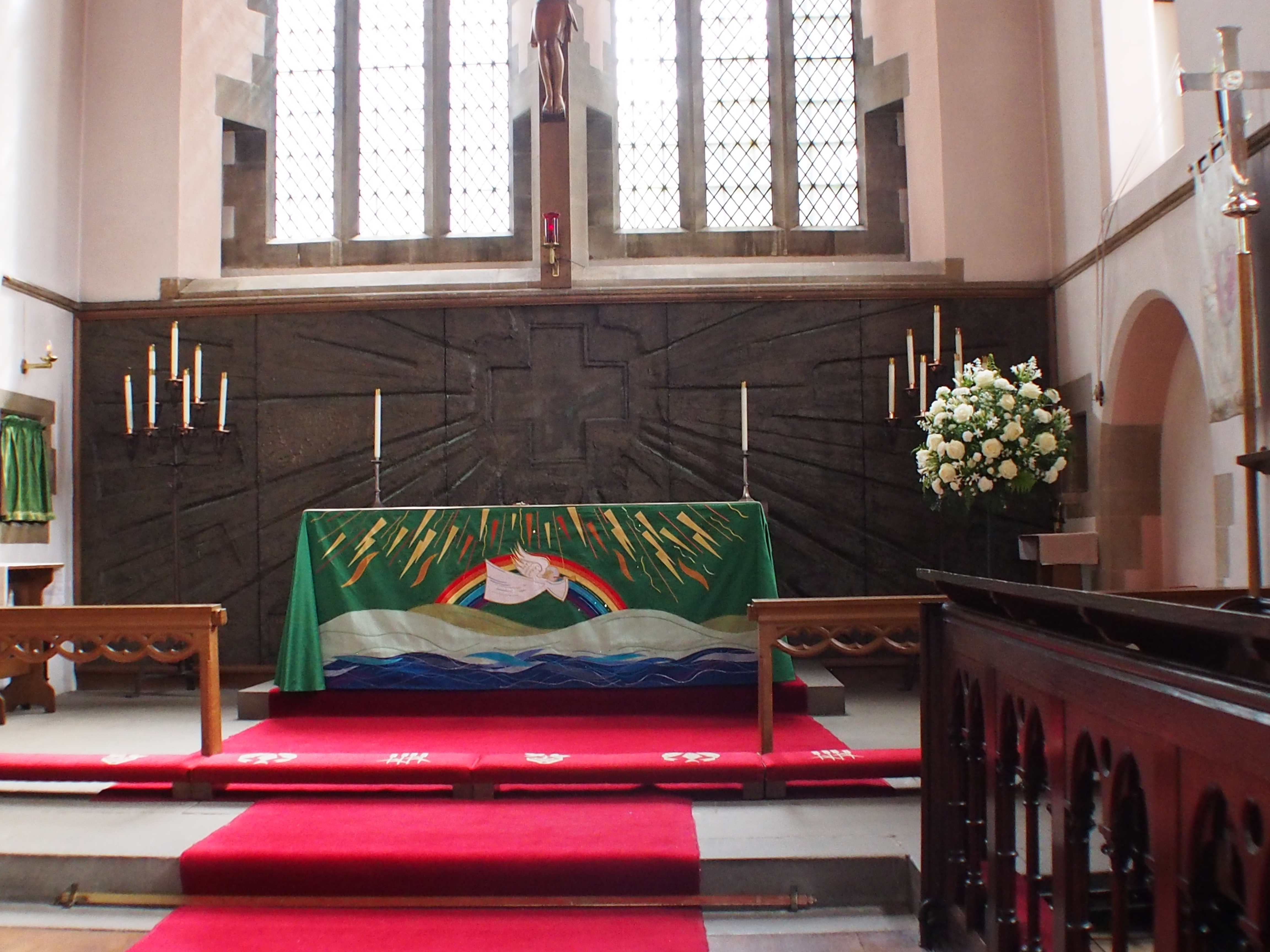

‘Saints and Pilgrims’
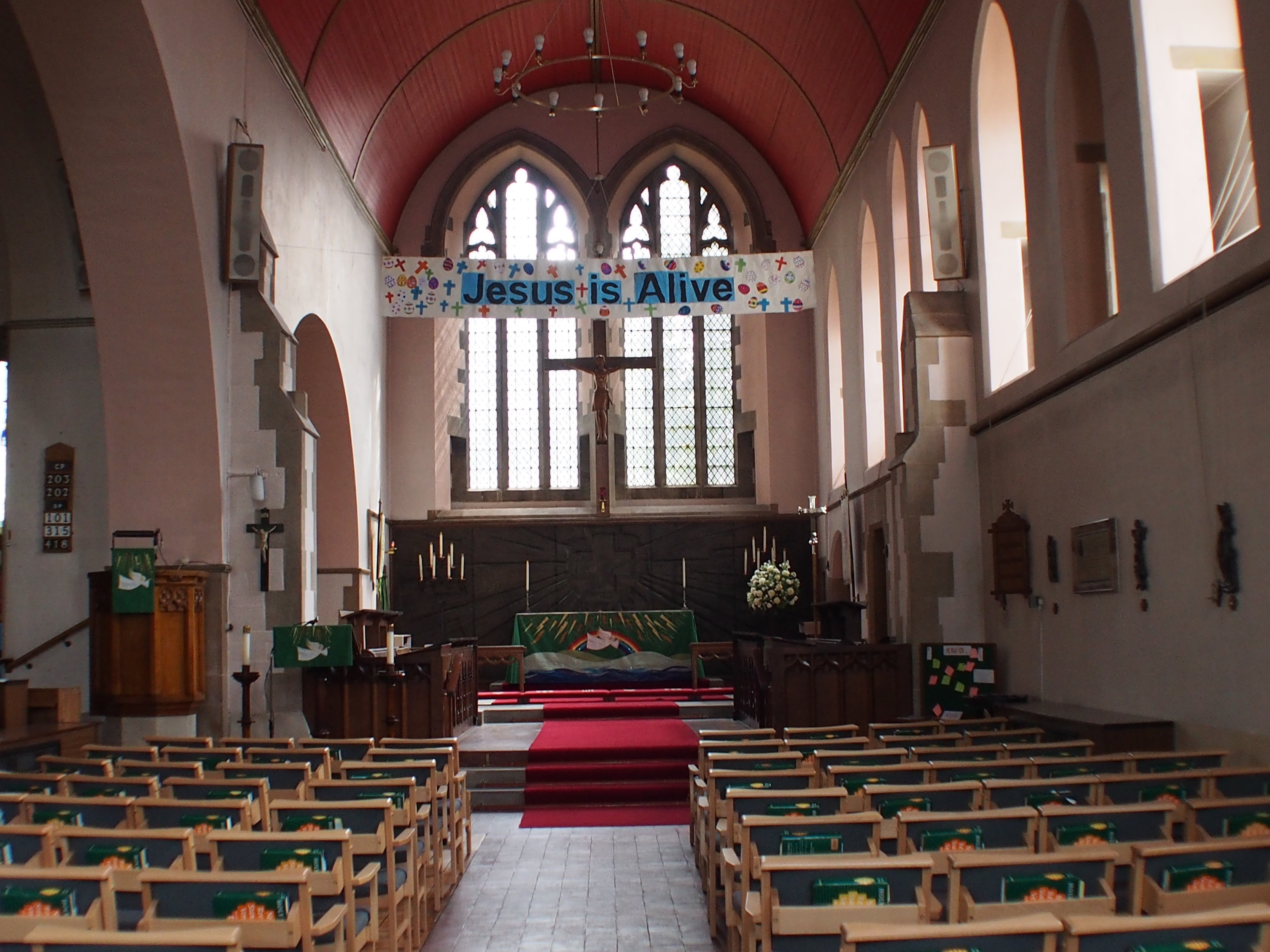
Interior
St. Oswald’s, Croxley Green
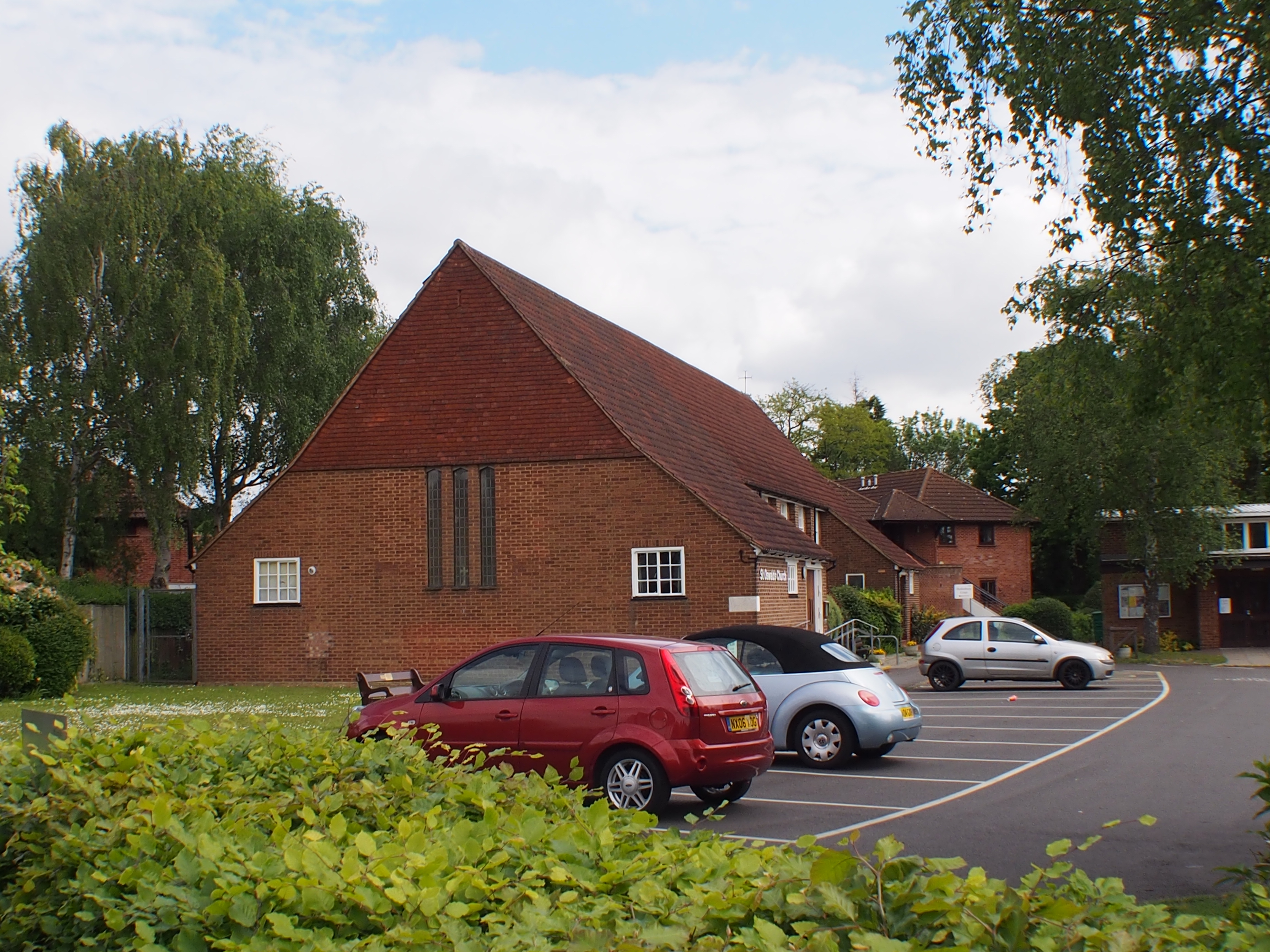
St. Oswald’s
St. Oswald’s is a relatively modern building – dating from the late 1930’s which makes it unusual.
I found it locked which was a shame. On the same site is a large housing association complex. Was the church intended as a chapel for this? There is plenty going on here as the website also shows – http://www.stoswaldschurch.org.uk
Suburban churches such as this are often not open – I am not sure why this is. Whilst St. Oswald’s is not a historic building steeped with centuries of history it is still able to speak of a faith which welcomes people by being open. A locked church gives out a very poor message to the community around it. I rate this as very poor for this study.
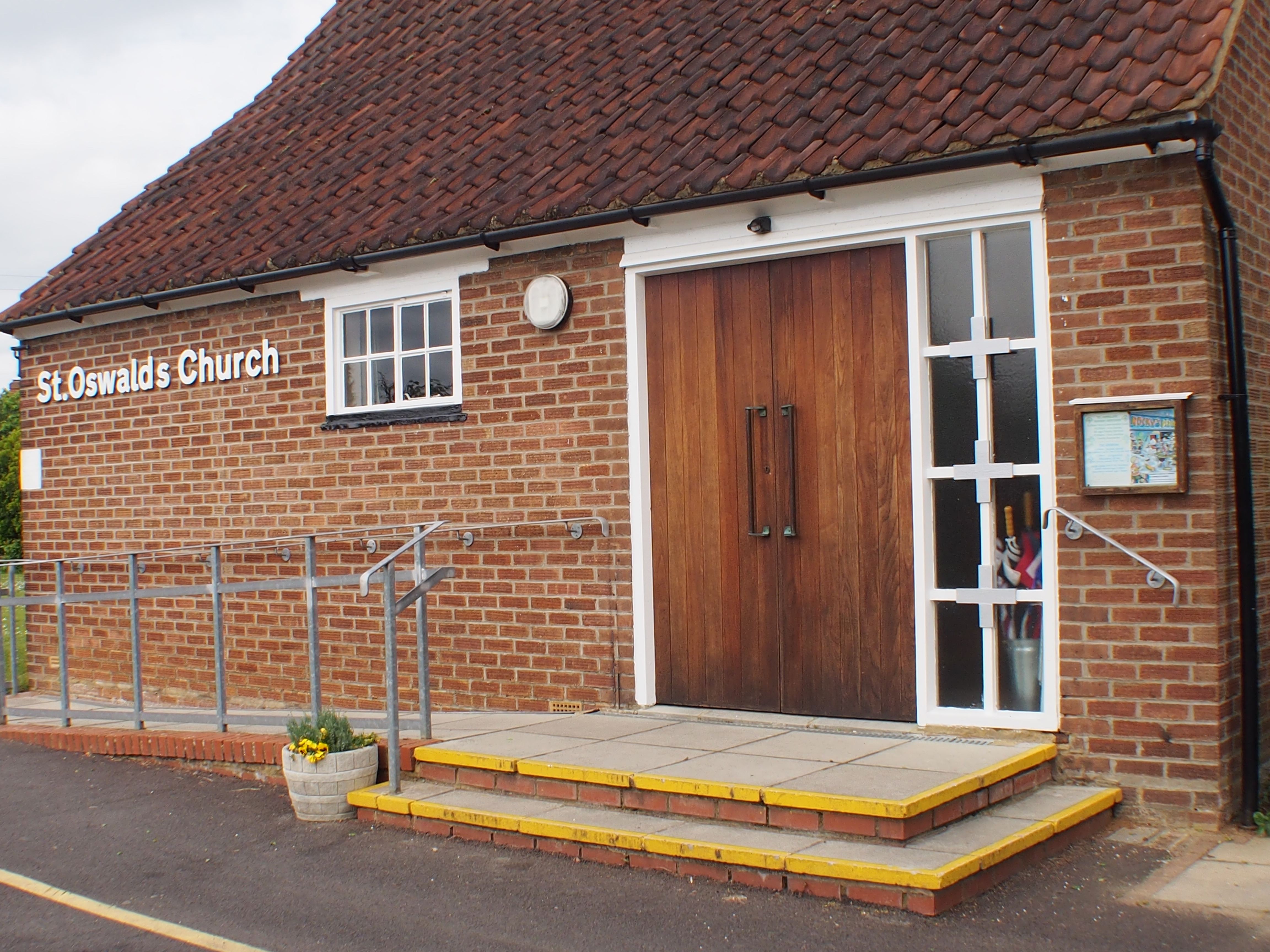
If only…
St. John’s, Heronsgate
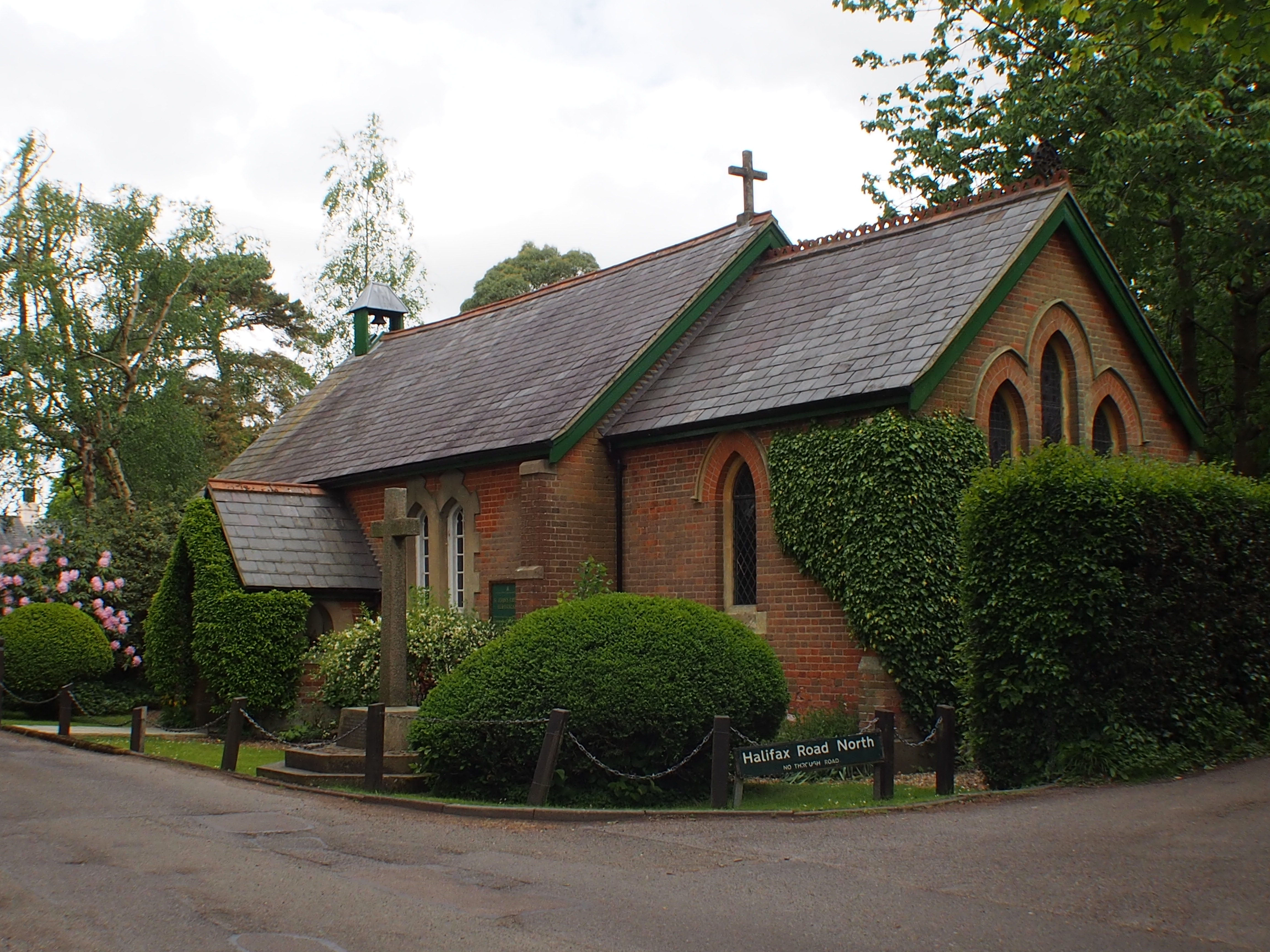
St. John the Evangelist
St. John’s is a fascinating little church on this private estate. This was originally the first estate developed by the Chartists in 1845. Some 35 cottages and a school were built. It was named O’Connorville after the leader but this was later changed. The small church is a delightful place and is very well cared for and obviously loved. At the time of my visit the organist was practising for a service. He told me something of the history of the place. A guide giving details of this story would be good as there is something to share here. The church is open each day and well worth seeking out as it has a lovely atmosphere. I found some postcards for sale but nothing else. A simple church which I very much enjoyed visiting. I have to rate it as poor for the purposes of this study.
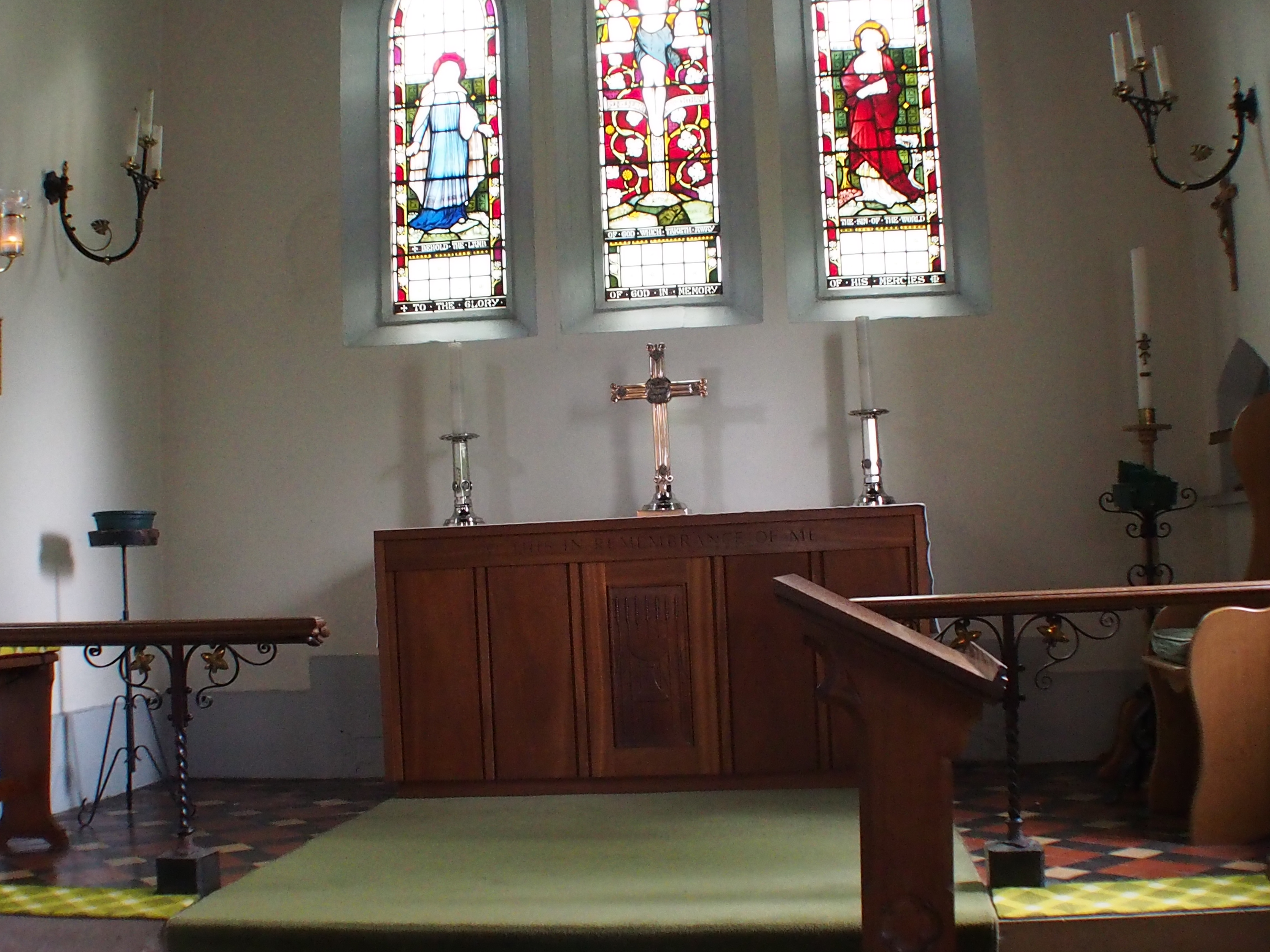
OLYMPUS DIGITAL CAMERA
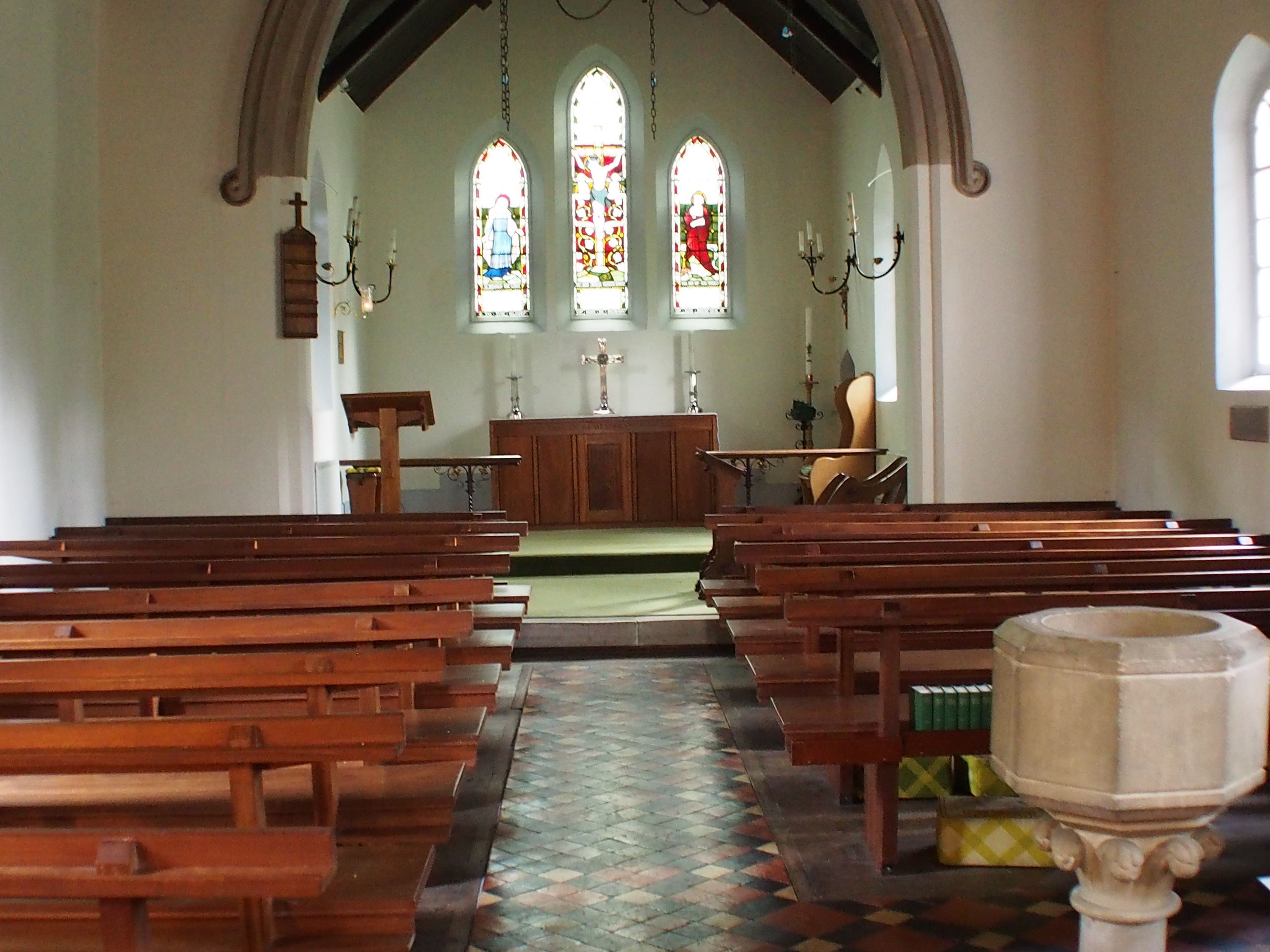
interior
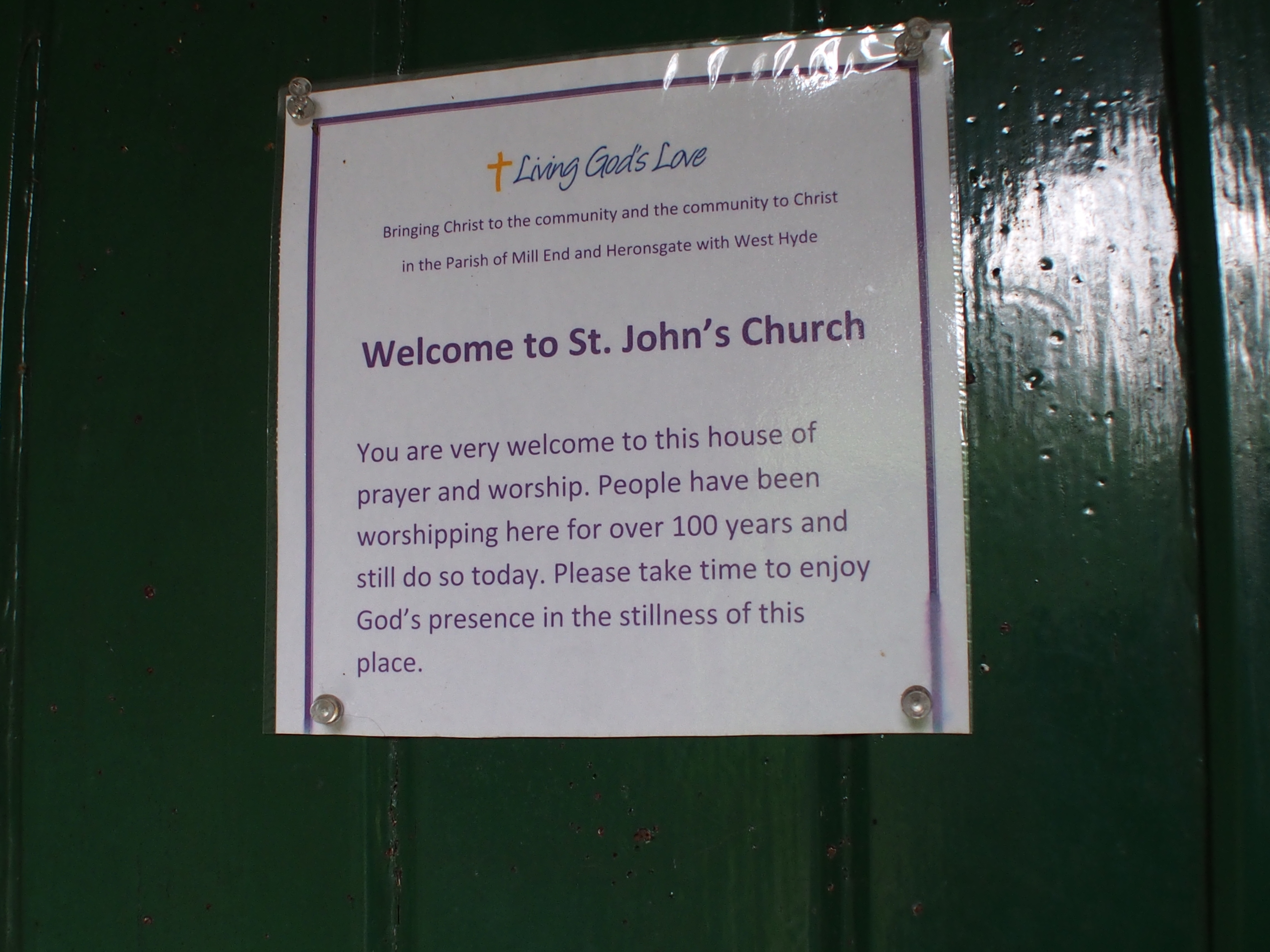
welcome
St. Peter the Apostle, Mill End

St. Peter, Mill End
This church is in the same parish as West Hyde and Heronsgate (see the website at http://parishofmillend.blogspot.co.uk/p/about-us.html – which gives no visitor information for any of the three churches but plenty else).
I re visited this church as I found it locked the first time but it is usually open each day. A study like this can only ever be a snapshot but I’m glad I was able to go again. There is a good welcome notice on the door of the church. This nicely sets the tone for St. Peter’s.
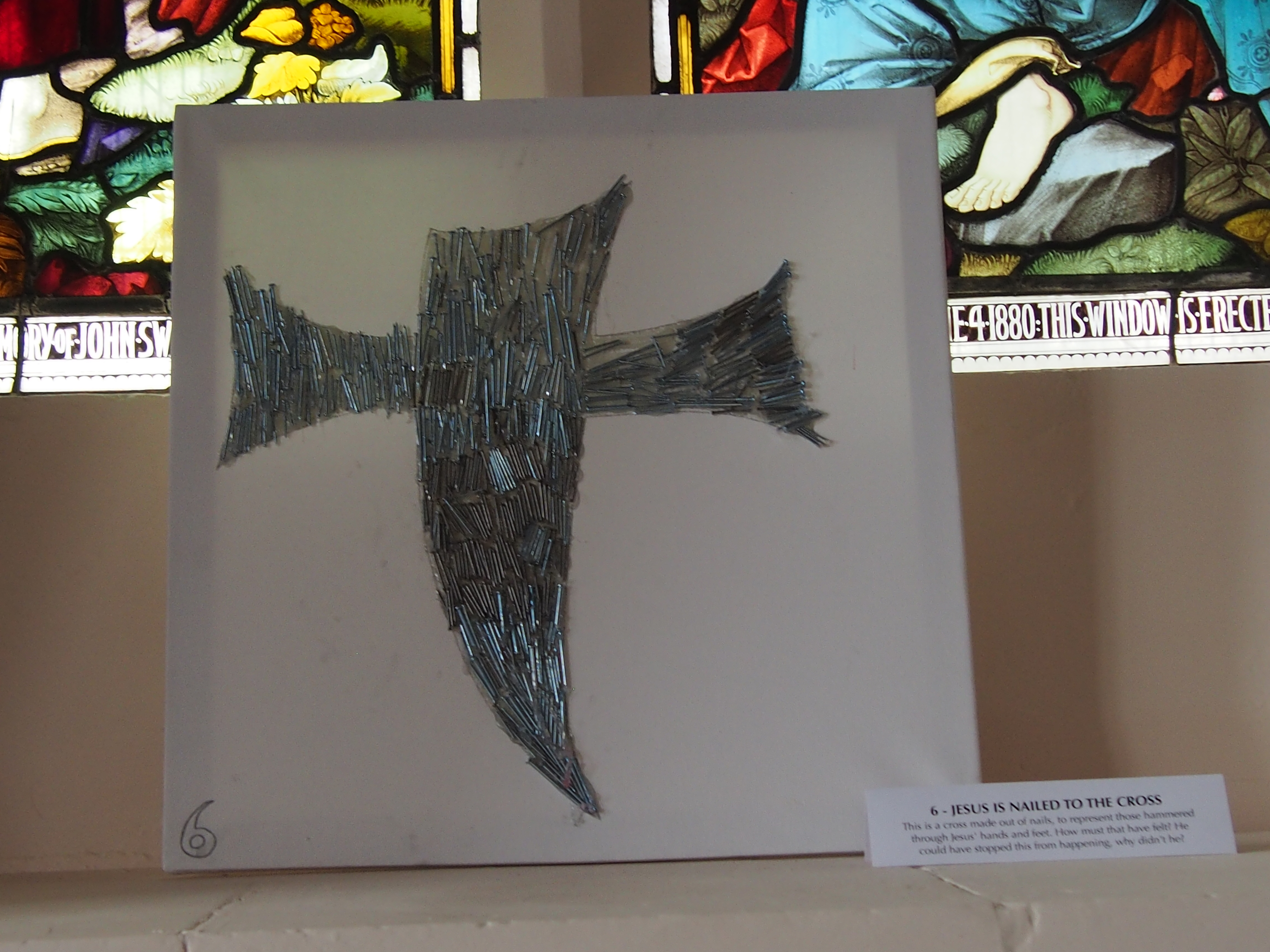
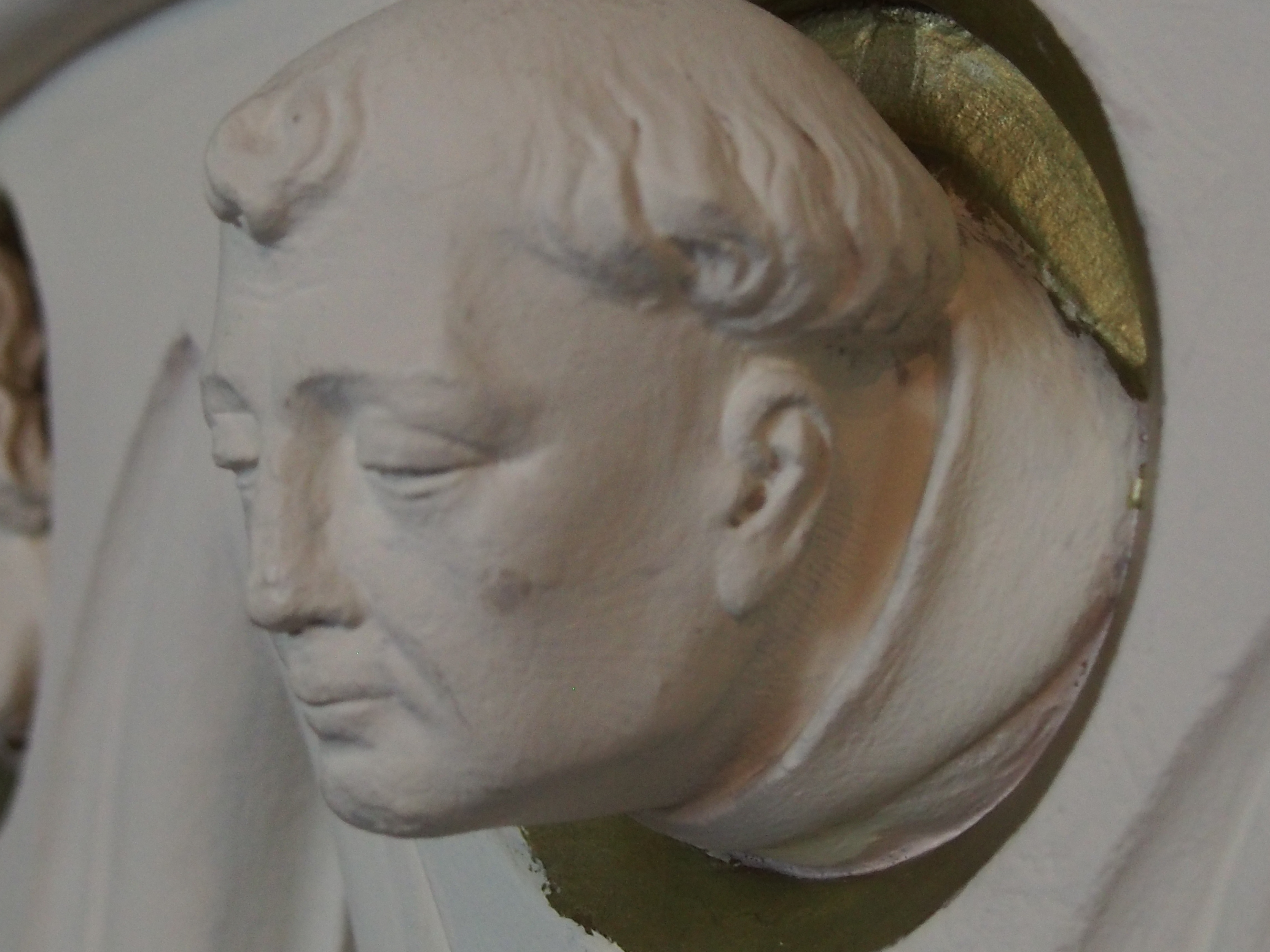
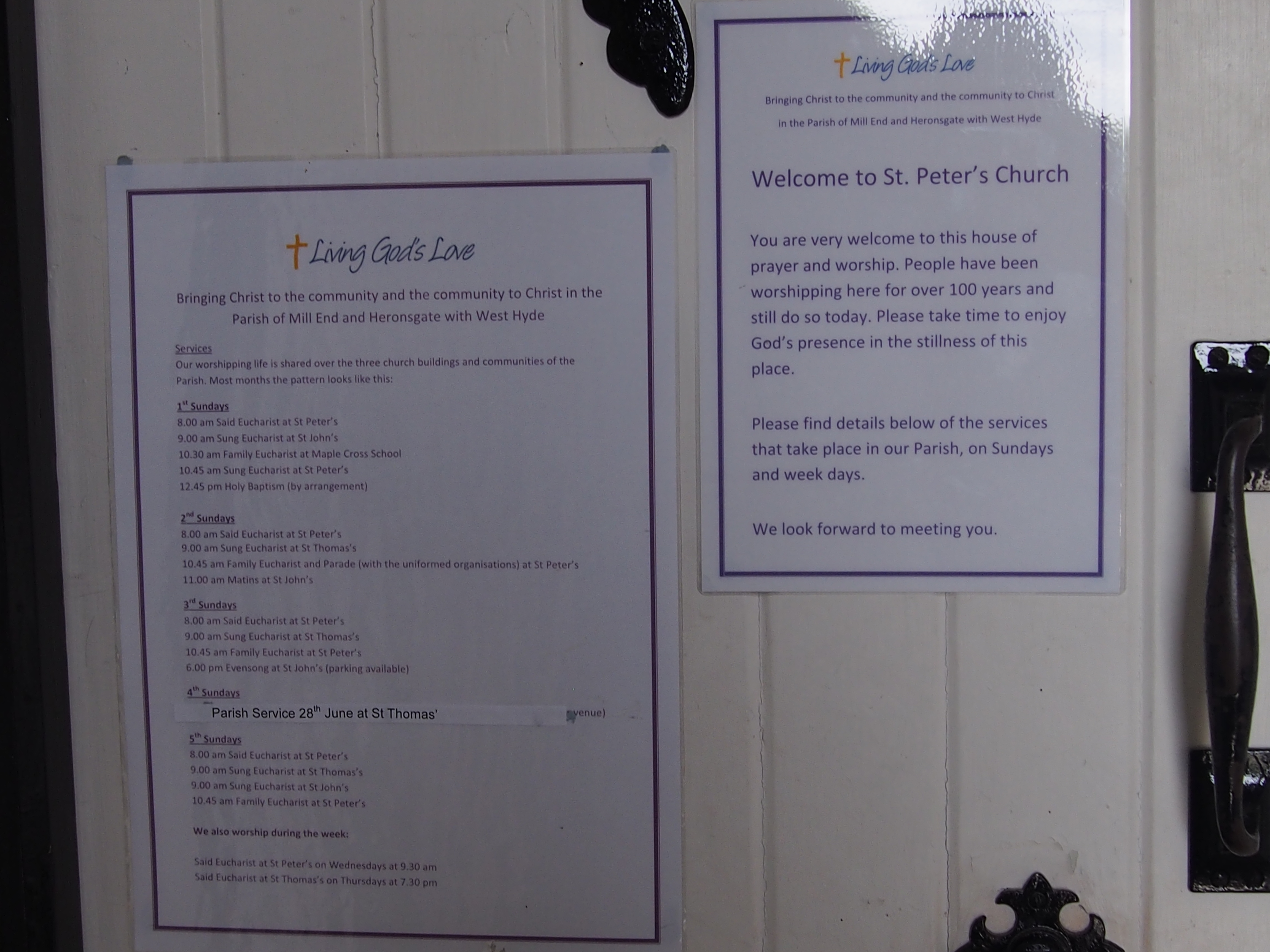 There is the usual ‘Saints and Pilgrims’ book that many churches in the Diocese of St. Alban’s have. Some lights are left on too which helps to create a good atmosphere. Some modern, and very good Stations of the Cross are displayed. A couple of these are shown below.
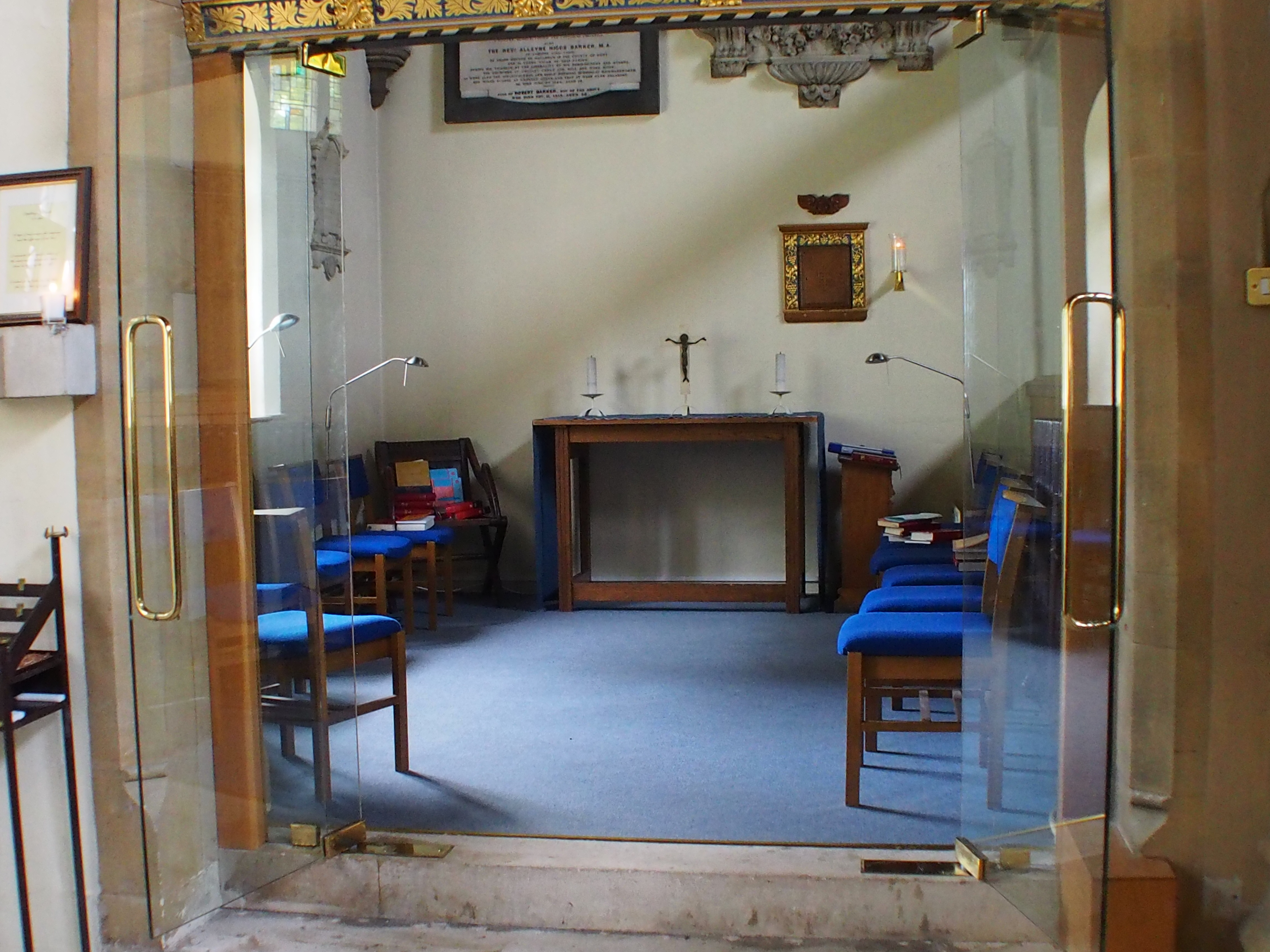
There is a Lady Chapel for quiet prayer and this is a nice space. A basket for prayer requests was at the back of church but might be better here?
There is a long kneeler around the altar rail and this is full of symbolism. An explanation of this is displayed and is well worth studying.
All in all, St. Peter’s is a nice church with a peaceful and prayerful atmosphere.
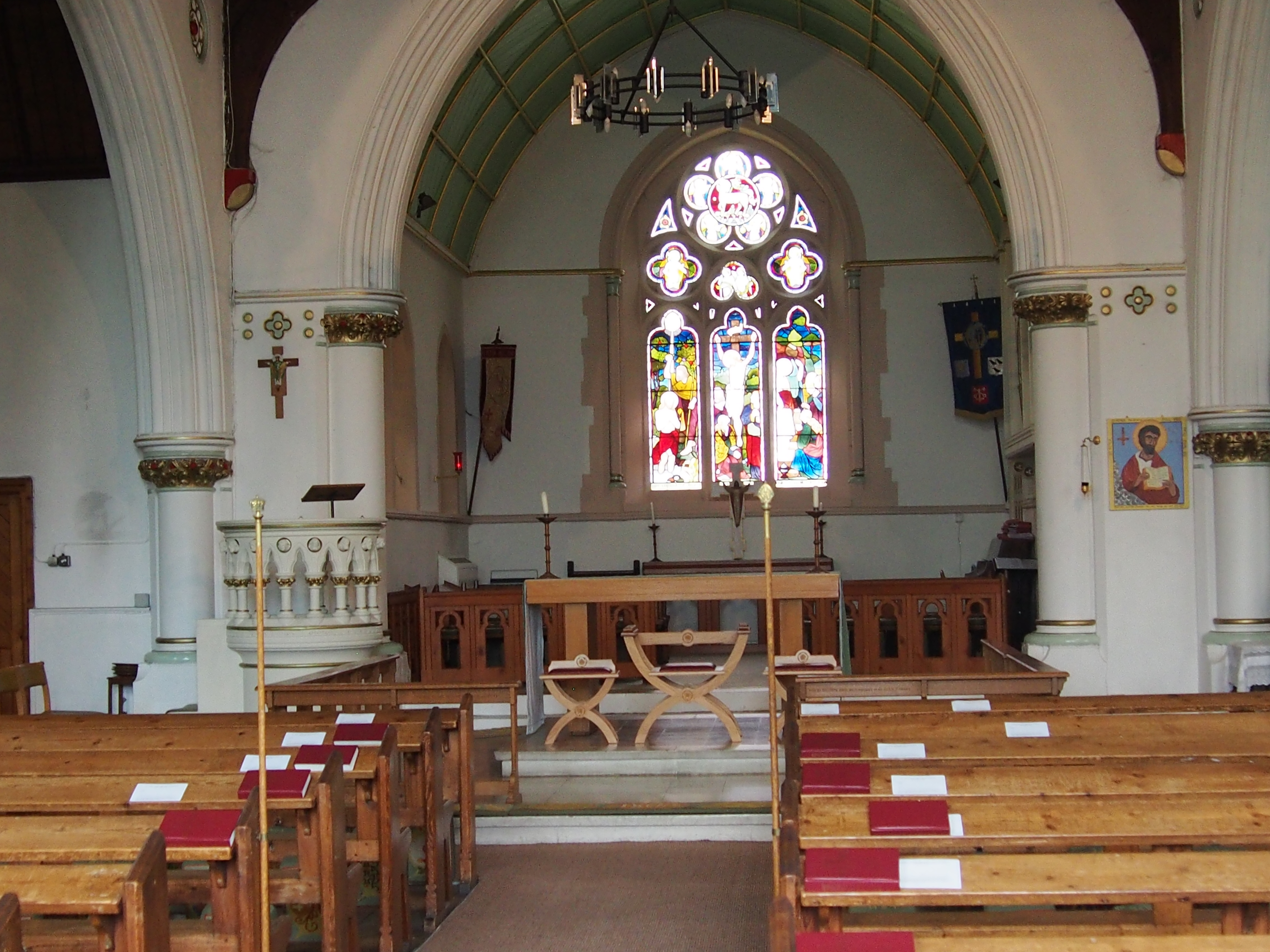
St. Mary’s, Rickmansworth

St. Mary’s, Rickmansworth
St. Mary’s is a large church in a prominent position. It is shared by the Anglicans and Methodists. St. Mary’s is open and I found the door open and a sign put out to welcome visitors.
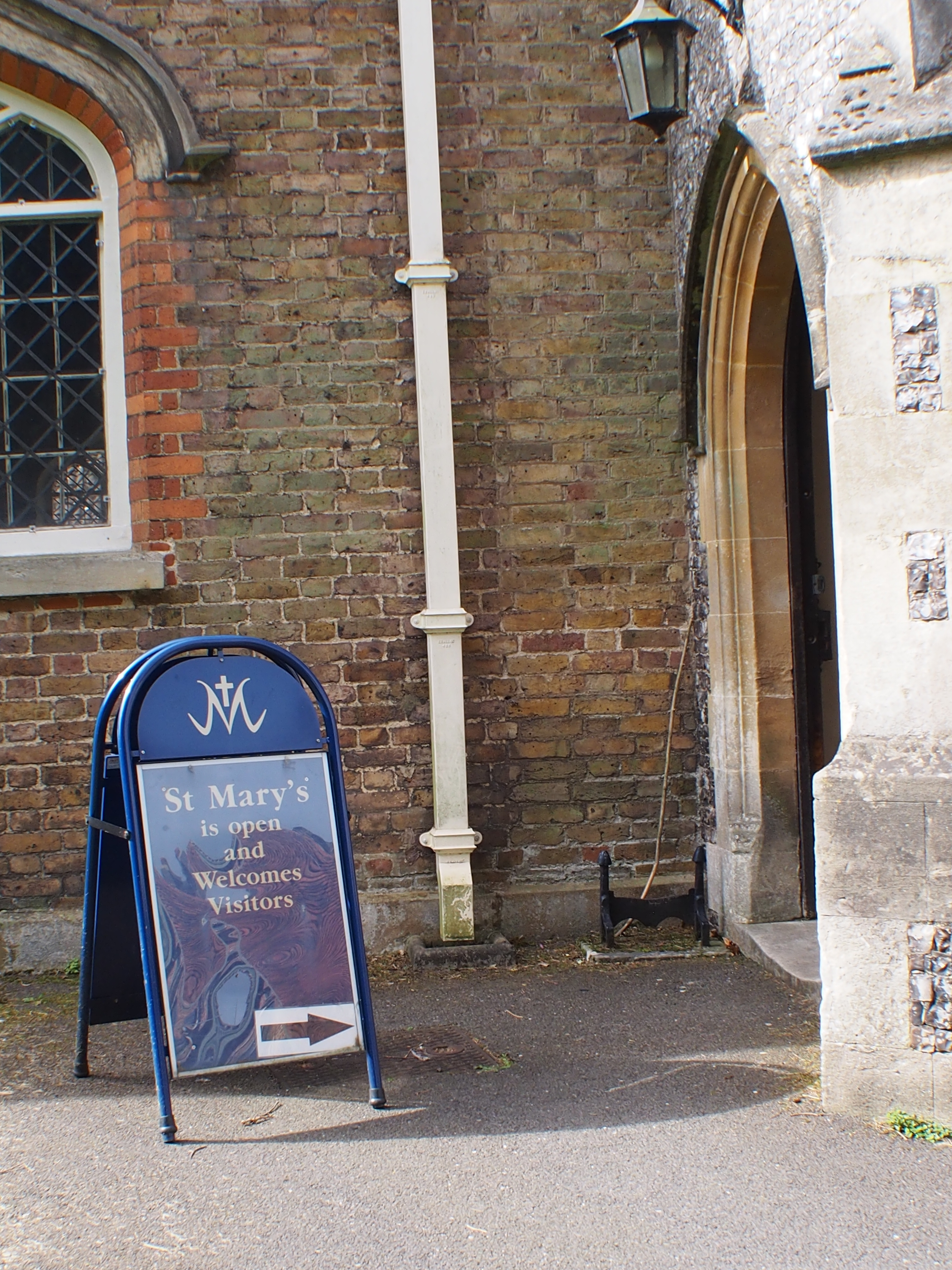
Welcome to St. Mary’s
Inside I found an excellent ‘Visit St. Mary’s’ leaflet. This folds out to A3 with a history, pictures and a plan. It is very well done indeed and would serve as a good model for other churches to follow. There is also a trail leaflet, mainly aimed at children which is also very good. This was produced by NADFAS (The National Association of Decorative and Fine Arts Societies). It is so rare to find something like this. The Diocesan prayer diary and ‘New Daylight’ Bible notes are available too. There is a display on church life here.
A prayer board is there (and is well used) as well as a votive stand, a children’s area and some of their work is displayed. Also a good display about World War 1 and 2 dead. The Lady Chapel is set aside for prayer – and the prayer books and bibles in it show that this is used. A ‘Saints and Pilgrims’ Book is displayed – this is an excellent initiative by the Diocese of St. Albans that is widely used.
St. Mary’s is a very well cared for church and some lights were left on to help give a welcoming atmosphere. The website can be found at http://www.stmarysrickmansworth.org.uk this gives good visitor information.
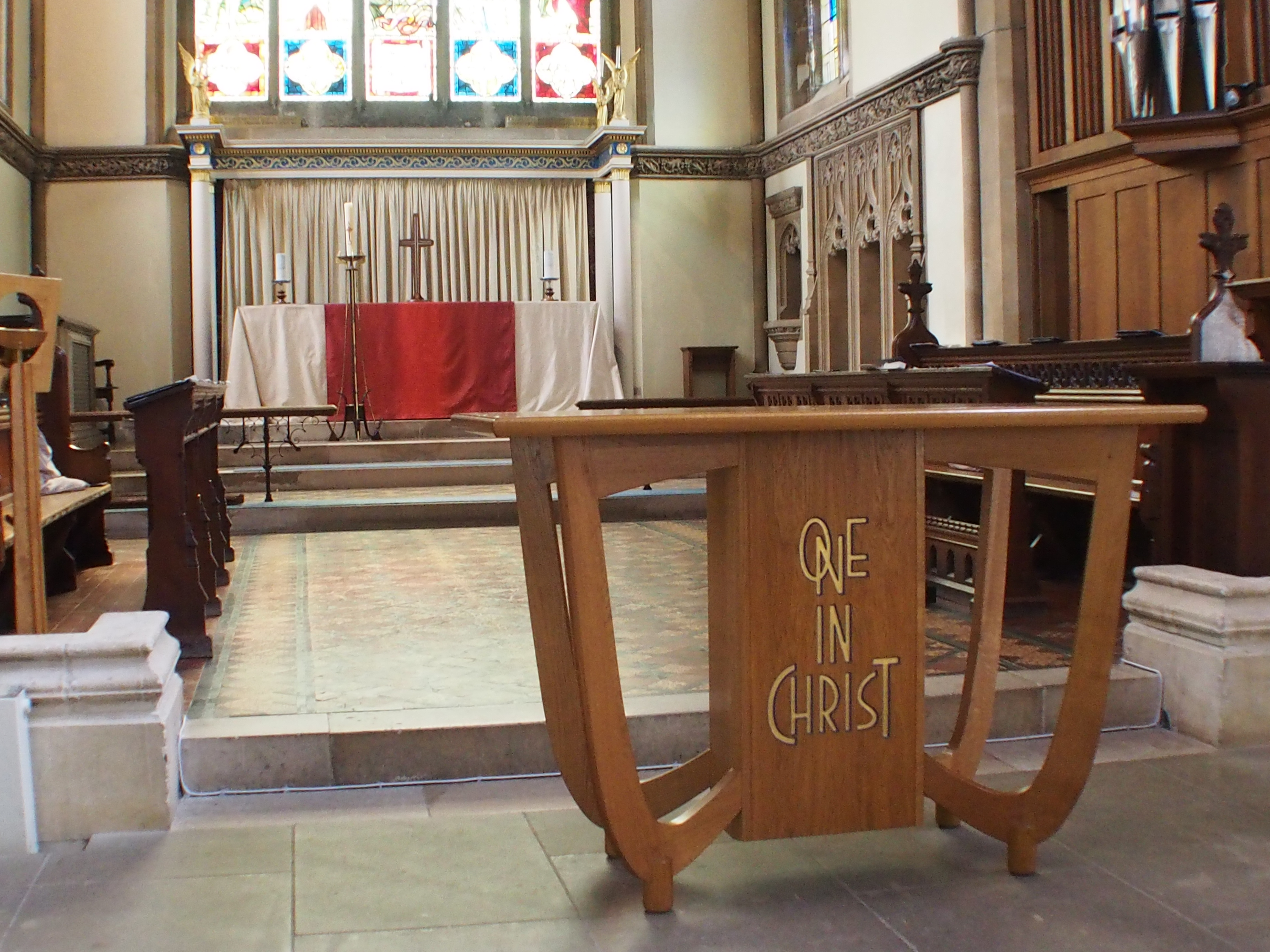
I rate St. Mary’s as excellent from the point of this study – go and have a look as this will give other churches some good ideas of how to welcome visitors. Here are some more pictures-
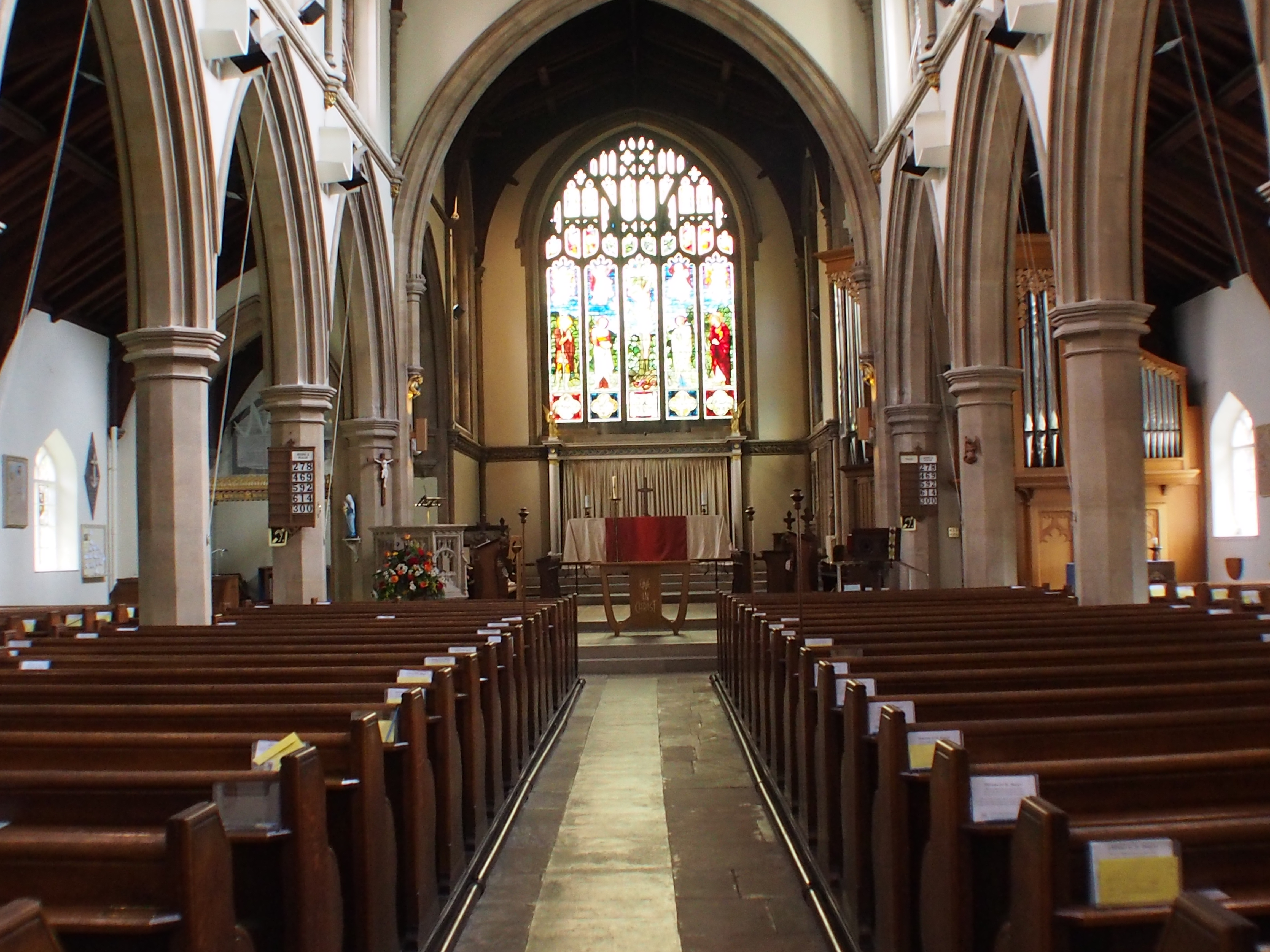
St. Mary’s interior
Lady Chapel
Nave and High Altar
`
St. Thomas, West Hyde
St. Thomas, West Hyde, Herts
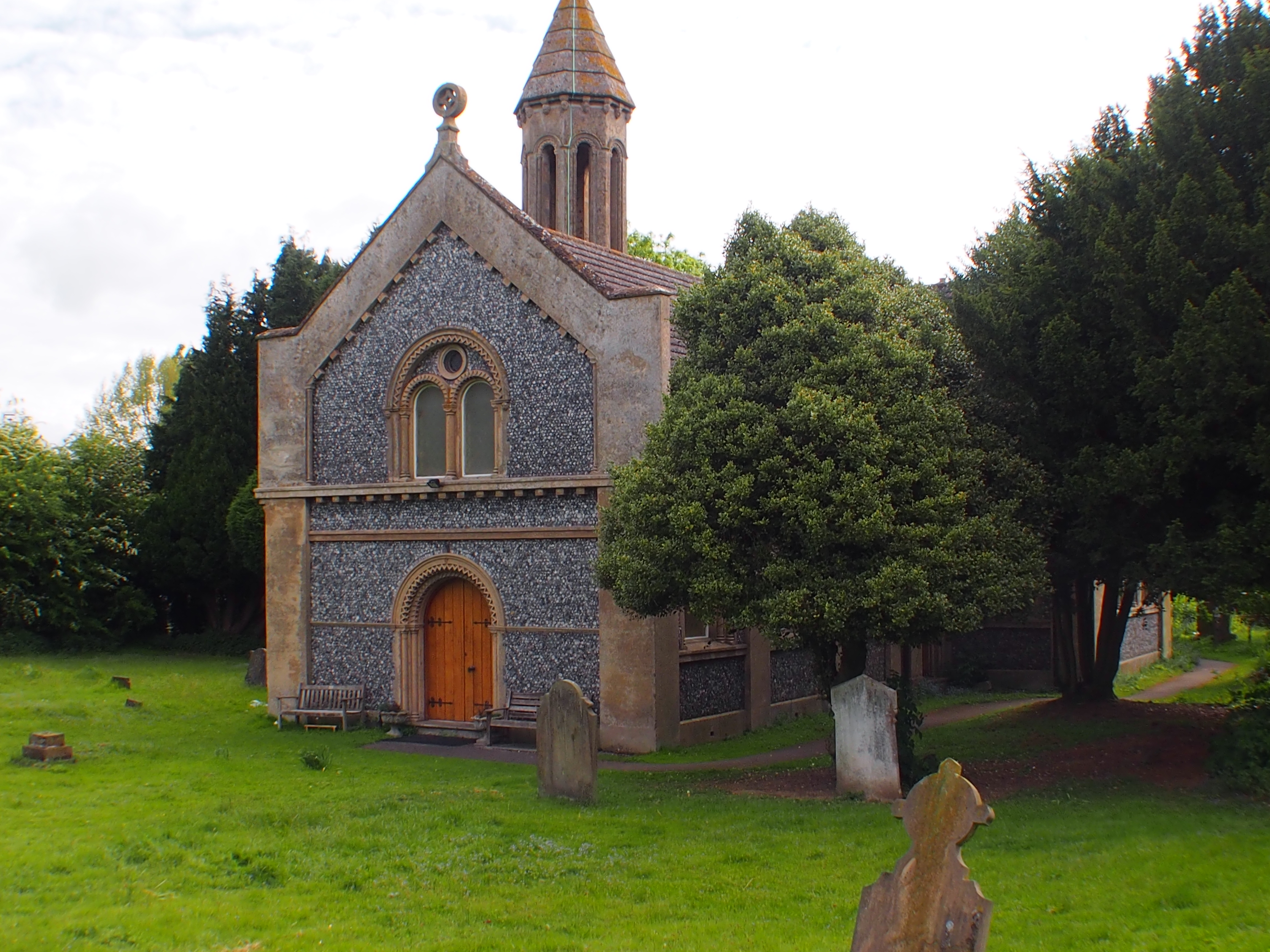
St. Thomas’ is a distinctive church which looks well worth a visit. It is set in beautiful countryside. It was firmly locked today with no indication of whether it is ever open outside of service times. The noticeboard gives details of services and events. There is a website http://parishofmillend.blogspot.co.uk/p/welcome.html but there is no mention of visitor information on this. A shame. I have to rate St. Thomas’ as very poor for the purposes of this study.
Sacred Trinity Church, Manchester
 Strictly speaking this church is in Salford but it is right next to Manchester city centre and very close to Manchester Victoria station.
It wasn’t open on the day of my visit but the website (http://www.salfordchurch.org/sacred_trinity/) does say this – ‘We are also open every Tuesday Lunchtime from 12 til 4(ish) for quiet prayer or just for you to have a nosey at our lovely building.’
It certainly looks like a church worth having a nosey at! I haven’t rated it but would like to go back.
Here is a picture of the other side of the building.

 churchtourismstudy